NICEIC Domestic Installer
Guides
EICR codes explained
What C1, C2, C3 and FI mean on your report, and which ones you must fix.
Published · Updated · By 2K Electrical Services
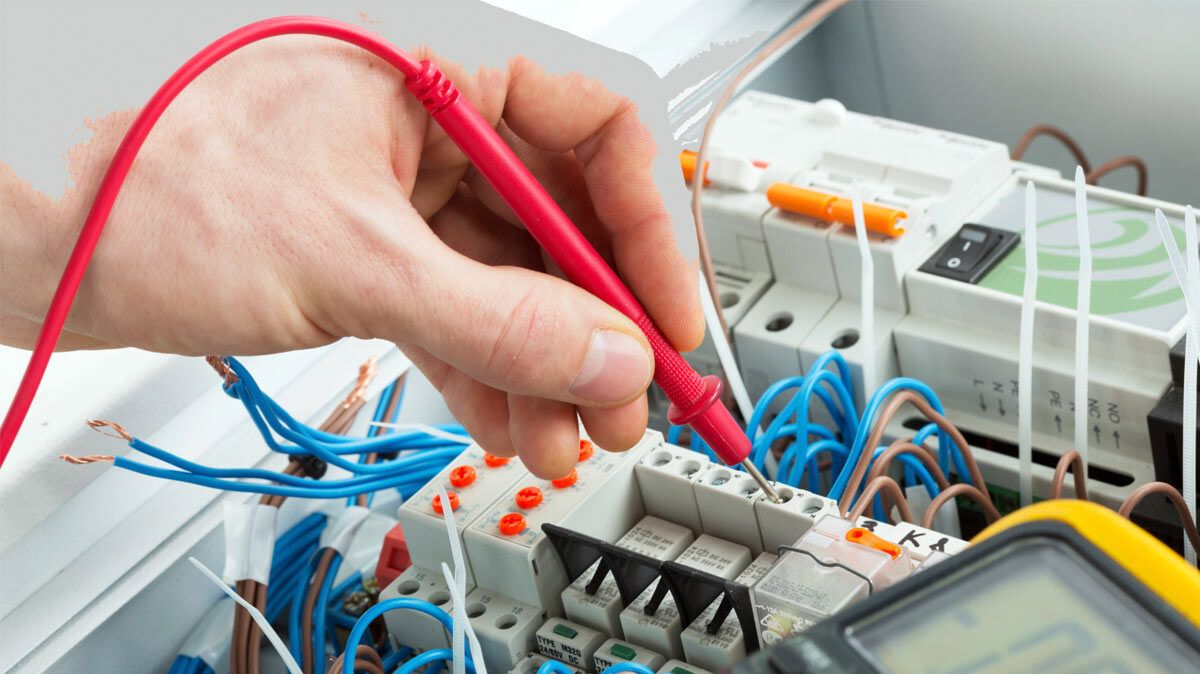
An Electrical Installation Condition Report (EICR) is the document you receive after the fixed wiring of a property has been inspected and tested against BS 7671, the IET Wiring Regulations (currently the 18th Edition, BS 7671:2018+A4:2026, which became the only valid version on 15 October 2026). Anything the inspector finds wrong is recorded as an observation and given a code that tells you how urgent it is.
The four codes
C1: Danger present
“Danger present. Risk of injury. Immediate remedial action required.” A C1 means someone could be hurt now. Typical examples are exposed live conductors behind a broken socket, a consumer unit with a missing cover, or incorrect polarity that makes metal parts live. The inspector will tell you straight away, make the fault safe if possible, and may switch off the circuit until it is repaired.
C2: Potentially dangerous
“Potentially dangerous. Urgent remedial action required.” A C2 is not an immediate threat but could become one through normal use or a single further fault. Missing earths on a lighting circuit, no RCD protection for sockets that could feed outdoor equipment, or badly damaged cable are common C2 observations.
C3: Improvement recommended
“Improvement recommended.” The installation does not meet the current regulations but is not dangerous. A plastic consumer unit, or a lack of RCD protection on a circuit that is otherwise sound, is often a C3. On its own a C3 does not make the report unsatisfactory, but it tells you what to budget for.
FI: Further investigation
“Further investigation is advised.” The inspector saw something that could not be fully tested or explained during the visit, for example a circuit that could not be traced or readings that did not make sense. Since Amendment 4 an FI on its own no longer makes the report unsatisfactory, but it still needs looking into. If the inspector suspects the problem is dangerous, they will code it C1 or C2 instead.
Satisfactory or unsatisfactory?
Any C1 or C2 gives the report an unsatisfactory rating. Those observations must be put right, and the electrician who does the work issues an Electrical Installation Certificate or Minor Works Certificate for it. Keep those certificates with the EICR; together they prove the installation was made safe.
A report with only C3 or FI observations is satisfactory. You do not have to act on a C3, although it is usually sensible to, and FI items should still be investigated.
Reports issued before 15 October 2026 were written to Amendment 3, under which an FI also made the report unsatisfactory. If you have an older report with an FI marked unsatisfactory, that was correct at the time.
What landlords have to do
Under the Electrical Safety Standards in the Private Rented Sector (England) Regulations 2020, landlords must have the installation inspected and tested at least every five years, or sooner if the report says so. They must give a copy of the report to existing tenants within 28 days, to new tenants before they move in, and to the local authority within 7 days of a written request. Where the report says further investigative or remedial work is needed, which covers C1 and C2 items and any FI the report asks to be investigated, the work must be done within 28 days or any shorter period the report gives. The landlord then needs written confirmation that the work is complete and must send it, with the report, to tenants and the local authority within 28 days. Since 2025 the same rules have been extended to social landlords. You are free to use a different electrician for the repairs than for the inspection, and the whole installation does not need to be re-tested afterwards, only the repaired parts.
Why it matters
If someone receives a shock or there is an electrical fire, an insurer, a court or a coroner will ask for the EICR and the certificates for any remedial work. A clear report with the codes dealt with is the evidence that you took the installation seriously.