NICEIC Registered
Guides
AFDDs: arc fault protection explained
What an arc fault detection device does, where BS 7671 requires one, and where it is recommended.
Published · Updated · By 2K Electrical Services
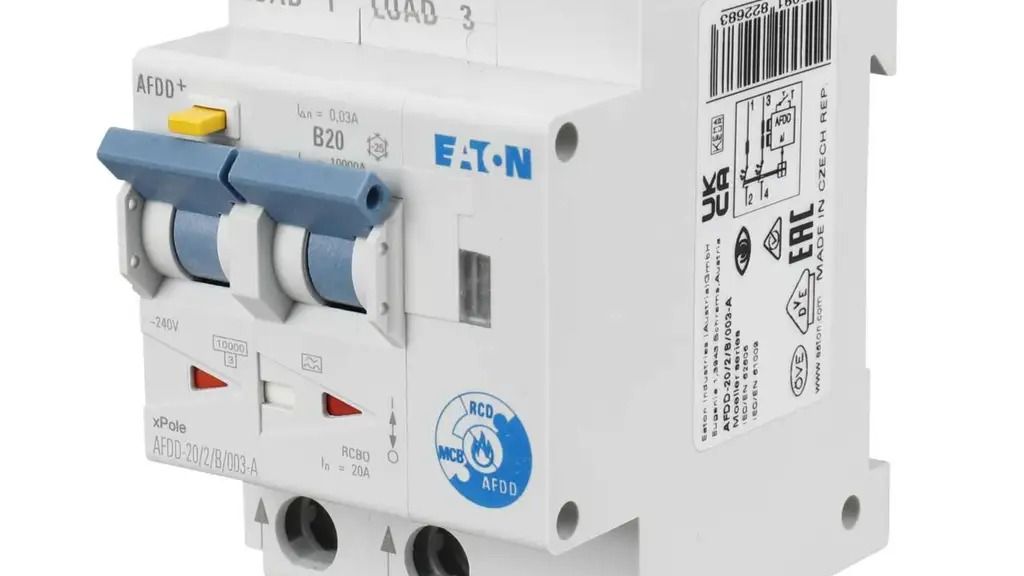
An arc fault detection device, or AFDD, switches a circuit off when it detects dangerous arcing: electricity jumping across a damaged cable or a loose connection. Arcing heats everything around it and is a common cause of electrical fires, yet a circuit breaker or an RCD often cannot see it. This guide explains how AFDDs work, where the current Wiring Regulations, BS 7671:2018+A4:2026, require them and where they are recommended.
What causes arcing
- A damaged cable, pierced by a nail or a screw, or crushed under furniture or flooring.
- A loose connection in a socket, switch or junction box, which heats up every time current flows through it.
- A worn flex or plug, or old cable whose insulation has dried out and cracked.
- Rodents chewing cables in a loft or under a floor.
Why a circuit breaker or RCD will not see it
There are two kinds of arc, and they slip past the usual protection in different ways.
- A series arc forms in a broken or loose conductor, in line with whatever is plugged in. The current through it is no higher than normal, often lower, so a circuit breaker has nothing to react to. No current leaks to earth either, so an RCD does not trip.
- A parallel arc forms between two conductors. An arc between line and earth usually trips an RCD. An arc between line and neutral leaks nothing to earth, and the bursts of current can be too short and irregular for a circuit breaker to trip quickly.
An AFDD watches the shape of the current for the high-frequency noise that arcing produces and switches off when it recognises a dangerous arc. It is designed to ignore the harmless sparking of light switches, plugs being pulled out and appliances with brushed motors.
What an AFDD looks like
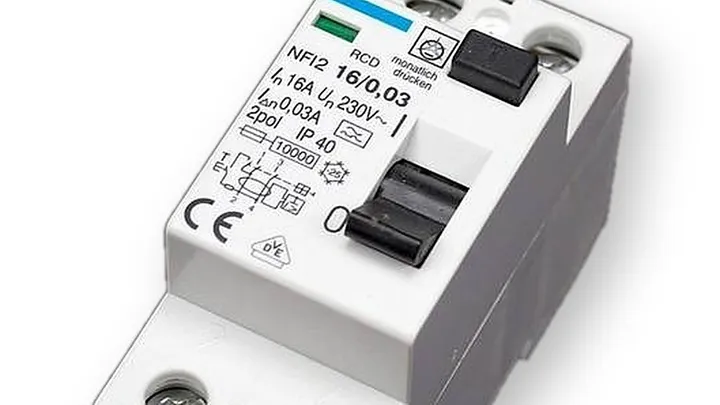
AFDDs are made to BS EN 62606 and fit in the consumer unit. In homes they usually come combined with an RCBO in a single device, which gives each circuit overload, short-circuit, earth leakage and arc fault protection. Most have a test button and many also test themselves automatically. Follow the manufacturer’s instructions on how often to check them.
Where BS 7671 requires them
Regulation 421.1.7 requires AFDDs on single-phase AC final circuits supplying socket-outlets rated up to 32 A in:
- high-rise residential buildings, broadly a residential building with a storey more than 18 metres above the ground;
- houses in multiple occupation (HMOs);
- purpose-built student accommodation;
- care homes.
This requirement came in with Amendment 2 in 2022. Amendment 4 kept the same list but reworded the first item: it used to say “higher risk residential buildings” and now says high-rise residential buildings, broadly matching the term used in the Building Regulations.
Where they are recommended
In every other building, including ordinary houses and flats, BS 7671 recommends AFDDs for the same circuits: single-phase socket-outlet circuits up to 32 A. They are particularly worth considering:
- in older homes with original wiring or a history of DIY alterations;
- in timber-framed or thatched buildings, and homes with irreplaceable contents;
- where someone would struggle to escape a fire, such as an older or disabled person living alone.
What AFDDs do not cover
- EV chargers. Amendment 4 makes clear that AFDDs are not required on circuits supplying EV charging equipment to BS EN 61851 that uses socket-outlets or connectors to BS EN IEC 62196-2.
- Existing wiring. BS 7671 is not retrospective, so an HMO wired before 2022 without AFDDs is not automatically unsatisfactory on an EICR. New socket circuits and a replacement consumer unit do need them.
- Fire warning. An AFDD makes an electrical fire less likely to start; it does not warn anyone if a fire starts for another reason. You still need working alarms: see Fire alarms for homes and HMOs.
If an AFDD keeps tripping
Modern AFDDs rarely trip for no reason. When one does, it is often pointing at a real problem on that circuit, such as a loose connection or a damaged flex. Unplug appliances one at a time to see whether one of them is the cause, and call an electrician if it keeps happening.
If you are replacing a consumer unit or adding socket circuits, ask about AFDDs at the same time. In an HMO they are required; in a family home they are one of the most useful upgrades you can add while the board is being changed.