NICEIC Registered
Guides
Why does my RCD keep tripping?
How to find out what is tripping your RCD, the most common causes, and when to stop resetting it and call an electrician.
Published · Updated · By 2K Electrical Services
An RCD that trips is doing its job: it has detected current leaking to earth, possibly through a person, and cut the supply in a fraction of a second. When it trips again and again, something on the installation is leaking current, and the pattern of the trips is usually the best clue to what. This guide explains how to narrow it down safely, and what an electrician checks when you cannot.
First, stay safe
- Do not keep resetting an RCD that trips straight away. Every reset puts power back onto whatever is faulty.
- Never tape, wedge or bypass an RCD, and do not swap it for a less sensitive one. Sockets need 30 mA RCD protection under BS 7671:2018+A4:2026, and so do most other circuits in a home.
- If you can smell burning, see scorch marks, hear buzzing, or water is involved, leave it off and call an electrician.
What an RCD reacts to
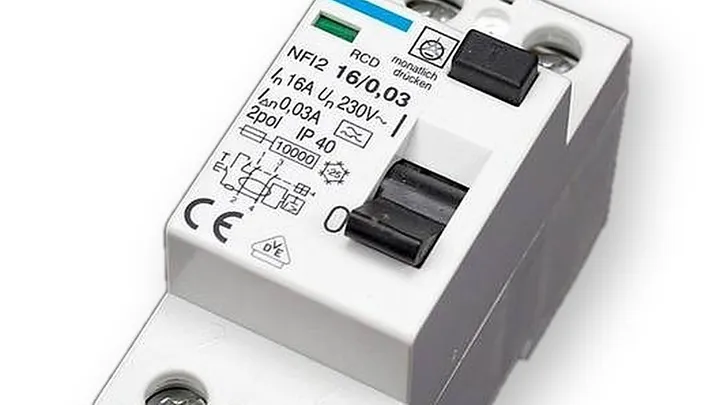
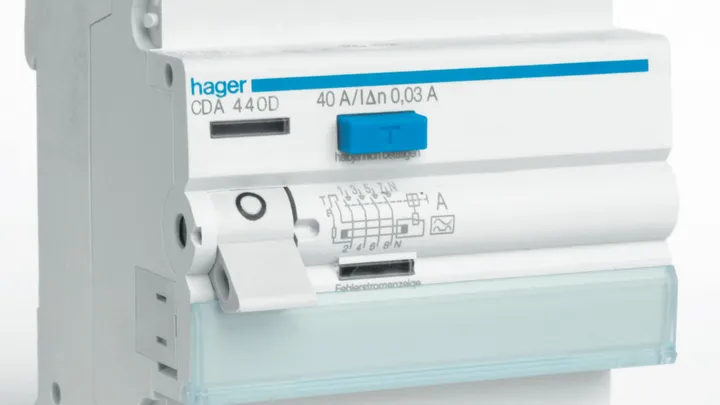
An RCD compares the current going out on the live conductor with the current coming back on the neutral; What is an RCD? explains how. A 30 mA device must trip by the time the difference reaches 30 mA, but it is allowed to trip from about half that, so a perfectly healthy 30 mA RCD can trip at 15 mA.
Many appliances with electronics or mains filters leak a little current to earth in normal use: computers, televisions, LED drivers, washing machines. Each leak is tiny, but on a board where one RCD protects half the house they add up. Good practice is to keep the normal leakage on each RCD below about 30% of its rating, around 9 mA for a 30 mA device.
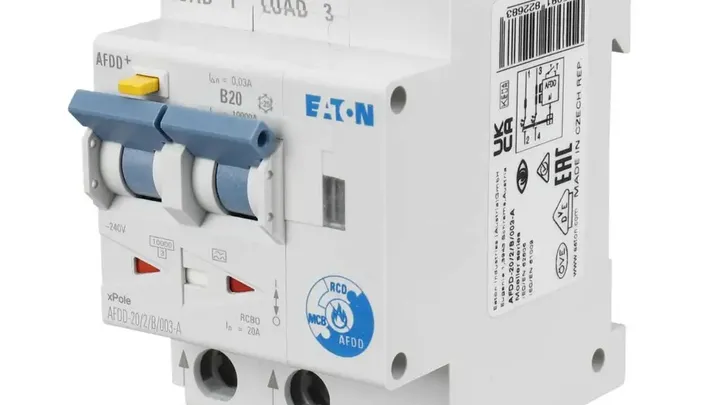
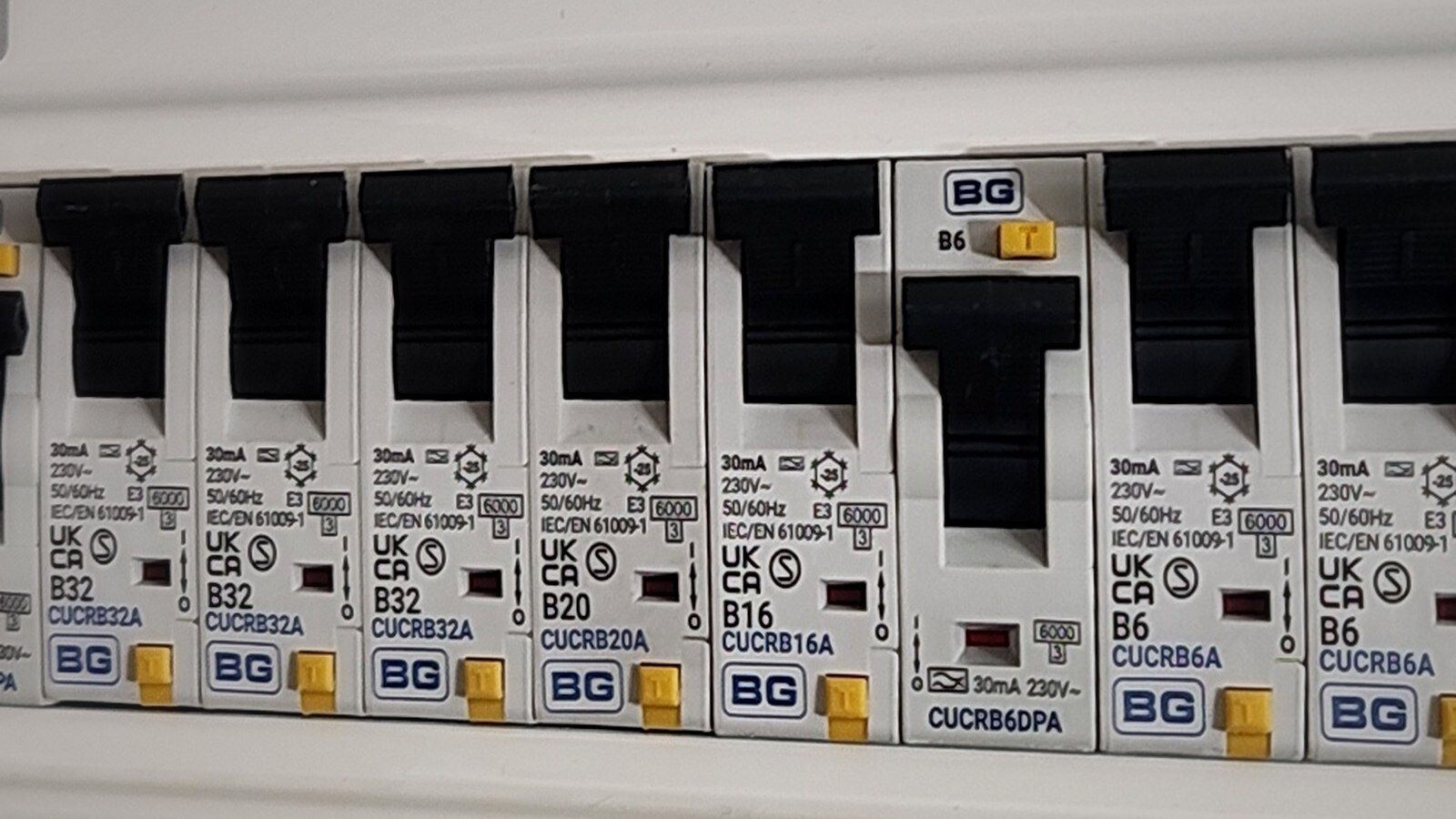
Many newer boards, like the one in the photo, have an RCBO for every circuit instead: a combined RCD and circuit breaker. An RCBO also switches off on overload or short circuit, so a tripped RCBO does not always mean leakage to earth. If it goes when the kettle, toaster and microwave are all on at once, overload is the more likely cause.
When does it trip?
The timing is the most useful clue.
- Immediately on reset, with nothing switched on: a fault on the fixed wiring, such as a nail through a cable, water in a light fitting or a damaged cable, or a faulty RCD. Call an electrician.
- When one appliance is switched on, or reaches a certain stage of its programme: that appliance. A heating element in a kettle, washing machine, dishwasher or oven is the usual suspect.
- At night, or at random when nobody is using anything: something that switches itself on, such as a fridge-freezer’s defrost heater, an immersion heater on a timer, a heating pump or outdoor lights on a sensor.
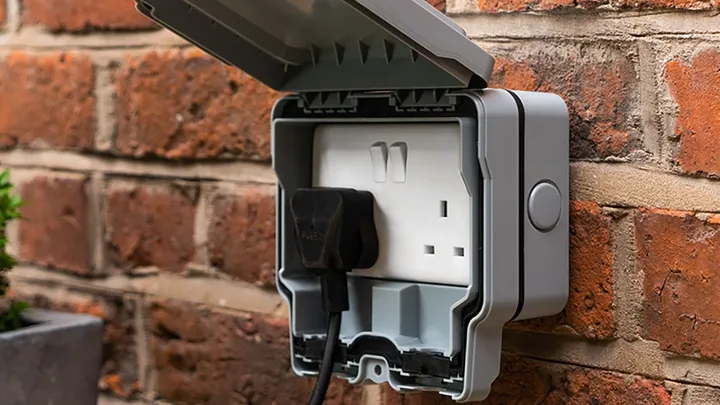
- When it rains: water getting into outdoor sockets, lights, a garden building supply or cable joints. IP ratings explains what outdoor equipment should be rated for.
- During a thunderstorm: a surge can occasionally trip an RCD. If it resets and stays on, that is not a fault.
Finding the circuit and the appliance
If the RCD will reset, you can usually narrow the problem down without tools.
- Unplug everything on the circuits the RCD protects, or simply everything in the house.
- Switch off all the circuit breakers (MCBs) under that RCD, then reset the RCD.
- Switch the circuit breakers back on one at a time. If the RCD trips as a particular one goes on, the fault is on that circuit.
- With all the circuits back on, plug in and switch on appliances one at a time, waiting a few minutes for each, longer for anything with a heater or a timer. If one trips the RCD, stop using it until it has been checked or repaired.
On older boards with one RCD covering several circuits, there is one confusing result: the RCD trips even with the faulty circuit’s breaker off, but only when another circuit is in use. That usually means a fault between neutral and earth. Most circuit breakers are single-pole and disconnect only the live conductor, so the neutral of the switched-off circuit stays connected and current from the other circuits leaks to earth through the fault. Finding it needs an electrician with test equipment.
Common causes
- Heating elements in kettles, washing machines, dishwashers, ovens and immersion heaters. Some oven and heater elements absorb moisture when they have not been used for a while and leak until they warm up.
- Fridge-freezers, often through the defrost heater, which explains trips in the middle of the night.
- Water in outdoor sockets and lights, in a ceiling light under a leaking bath or shower, or in a garden supply.
- Damaged cables, typically a nail or screw through a cable after hanging pictures, putting up shelves or fitting a kitchen, or cables chewed by rodents in a loft or under a floor.
- Too many circuits on one RCD. On older split-load boards the normal leakage from many appliances adds up until the RCD trips at random. Spreading the circuits across more RCDs, or giving each circuit its own RCBO, cures it.
- An ageing RCD that now trips too easily, or a faulty one that will not reset.
Some equipment, such as EV chargers and heat pumps, also needs a particular type of RCD to be protected properly; RCD types covers the differences.
What an electrician will do
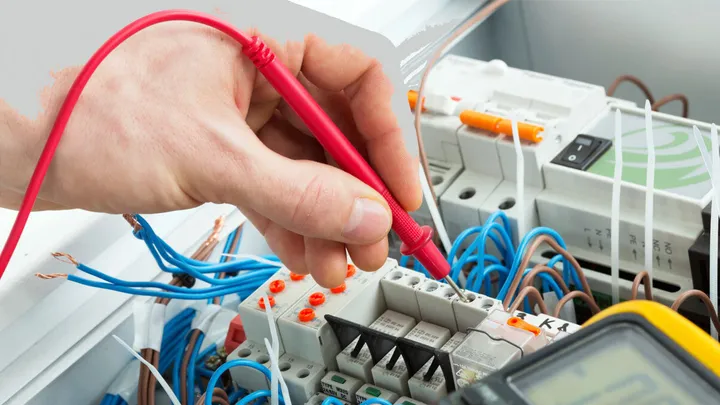
- Test the insulation resistance of each circuit to find the one with leakage, then narrow it down to the cable, accessory or fitting.
- Measure the standing leakage on each RCD with a clamp meter while appliances are running, to see whether the problem is one fault or many small leaks adding up.
- Test the RCD itself: the current it trips at and how quickly, against BS 7671.
- Recommend the fix: repairing a damaged cable, replacing an appliance, or splitting the circuits across more RCDs or individual RCBOs so a single fault no longer switches off half the house.
The test button
Press the test button on each RCD or RCBO every six months. If it does not trip when you press it, or will not reset afterwards, have it checked.